

Standing at the jewelry counter, you spot two glittering pieces that catch your eye—but only one feels special when you hold it. For fashion-forward American women who crave unique, affordable luxury, recognizing true craftsmanship makes all the difference. Understanding the marks of genuine, handmade jewelry not only helps you avoid cookie-cutter designs, but also empowers you to choose pieces with lasting quality and real character.
Table of Contents
- What Distinguishes Jewelry Craftsmanship
- Types Of Jewelry And Crafting Methods
- Essential Materials And Finishing Techniques
- How Craftsmanship Affects Wear And Value
- Avoiding Common Pitfalls in Jewelry Selection
Key Takeaways
| Point | Details |
|---|---|
| Human Control Defines Craftsmanship | Genuine handcrafted jewelry is characterized by skilled artisans making intentional choices, unlike mass-produced items which prioritize consistency over individuality. |
| Material and Finish Matter | The durability and beauty of jewelry rely heavily on the quality of materials used and the finishing techniques applied, impacting overall value. |
| Quality Craftsmanship Ensures Longevity | Investing in well-crafted pieces guarantees durability and comfort, making them worthwhile for long-term wear. |
| Informed Purchases Lead to Satisfaction | Understanding materials and craftsmanship allows buyers to make confident choices, avoiding common pitfalls in jewelry selection. |
What Distinguishes Jewelry Craftsmanship
Real craftsmanship isn’t about machines pumping out identical pieces at lightning speed. It’s about intentional choices, skilled hands, and attention to details that actually matter to you.
The core difference comes down to one thing: human control. When a piece is genuinely handcrafted, a skilled artisan’s hands guide each step—from shaping the metal to setting each stone. This is fundamentally different from mass production, where machines dictate precision and consistency takes priority over character.
The Human Element vs. Mass Production
Handmade jewelry shows individuality that factory pieces simply cannot replicate. Here’s what separates them:
Here’s a quick comparison of handcrafted vs mass-produced jewelry:
| Aspect | Handcrafted Jewelry | Mass-Produced Jewelry |
|---|---|---|
| Individuality | Each piece unique | All pieces identical |
| Quality Control | Inspected by artisan | Automated or minimal checks |
| Material Selection | Often premium, intentional | Can include lower-cost mixes |
| Emotional Value | Often carries a story | Limited personal attachment |
| Longevity | Built for lasting wear | May wear out or tarnish fast |
- Intentional decisions: Artisans adjust techniques based on the specific material and design, not a preset program
- Visible skill marks: Small variations in finish tell you someone cared enough to perfect it by hand
- Quality control that matters: Each piece gets personal inspection, not just a quick scan on a conveyor belt
- Unique characteristics: No two pieces are identical, even from the same collection
True craftsmanship means choosing quality over quantity—every piece matters because someone invested time in making it right.
Skill, Knowledge, and Cultural Heritage
Traditional craftsmanship encompasses more than just technique—it involves deep knowledge passed down through years of practice and often across generations. This is especially true in jewelry making, where understanding metal properties, stone setting, and design principles comes from experience, not a training manual.
This combination of careful manual techniques and mastery is what separates a beautiful piece from something that looks good temporarily but doesn’t hold up.
When you’re evaluating jewelry, look for signs of genuine craftsmanship. Proper jewelry care for lasting sparkle starts with choosing pieces made with real attention to durability. Fine finishing, secure stone settings, and quality materials all reflect the maker’s commitment.
Craftsmanship also shows in material choices. Premium materials like sterling silver aren’t just about looking expensive—they’re about longevity. A well-crafted piece in quality materials becomes something you actually wear daily, not something that tarnishes or breaks after a few months.
Pro tip: When shopping for jewelry, ask about the maker’s process and materials. Brands transparent about their craftsmanship—from metal type to construction methods—are betting on quality that speaks for itself.
Types Of Jewelry And Crafting Methods
Different jewelry pieces demand different techniques. A delicate necklace requires something entirely different from a statement ring, and understanding these distinctions helps you appreciate why quality craftsmanship matters.
Jewelry comes in countless forms, each requiring specific skills and tools. Common types include rings, necklaces, bracelets, earrings, pendants, and brooches. Each type serves a different purpose and sits on your body differently, which shapes how it’s constructed and what materials work best.
Core Crafting Techniques
Metalsmithing techniques form the foundation of fine jewelry making. Here are the methods that transform raw materials into wearable art:
- Soldering: Joining metal pieces together using heat and solder, creating strong, seamless connections
- Casting: Pouring molten metal into molds to create complex shapes with precision
- Wire wrapping: Bending and twisting wire to secure stones and create intricate designs by hand
- Polishing: Hand-finishing pieces to achieve the desired shine and smoothness
- Enameling: Applying colored glass-like finishes that fuse to metal under heat
- Bead stringing: Arranging and threading beads onto wire or cord for necklaces and bracelets
The best method isn’t always the fastest one—it’s the one that suits both the design and the materials being used.
How Jewelry Types Shape the Process
Earrings need secure, lightweight construction because they hang from delicate ear lobe skin. Rings face constant friction from daily wear, so they require durable soldering and reinforced bands. Necklaces must balance weight with comfort since they rest around your neck.
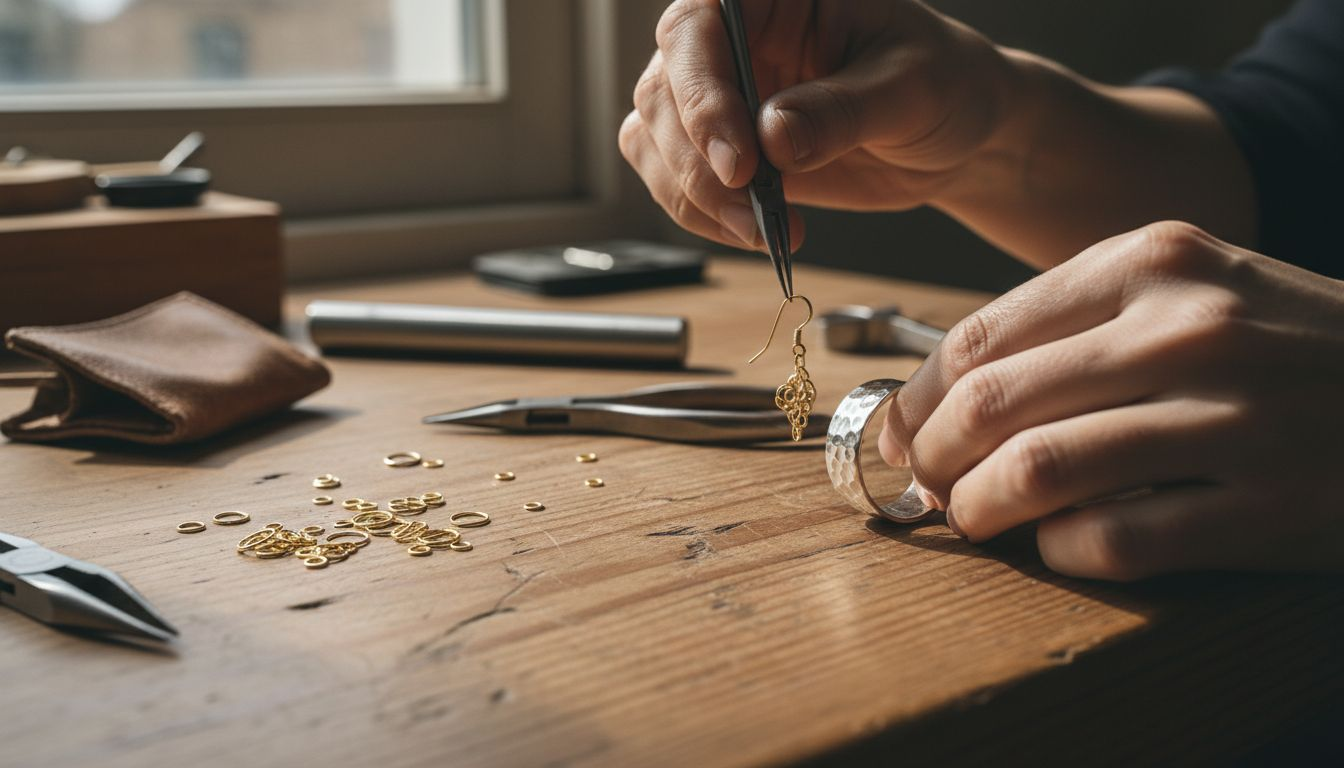
Modern craftsmanship blends traditional metalworking with contemporary design technology. Computer-aided design now helps artisans visualize pieces before creation, while vacuum casting ensures consistent, high-quality results.
When you’re shopping for everyday pieces, understanding these methods reveals why 6 essential types of everyday jewelry for modern women matter. Quality construction determines whether a piece lasts years or months.
The investment in proper technique shows itself through durability, comfort, and how pieces actually look on you. A well-soldered joint holds through countless wearings. Proper polishing catches light the way it should. Wire wrapping distributes weight evenly so stones stay secure.
Pro tip: Ask jewelry makers which techniques they use for specific pieces—brands confident in their craftsmanship will happily explain why they chose hand-soldering over factory shortcuts or why certain pieces require casting instead of stamping.
Essential Materials And Finishing Techniques
The difference between jewelry that lasts a lifetime and pieces that fade comes down to two things: what it’s made from and how it’s finished. These choices determine whether your jewelry stays brilliant or dulls, holds up to daily wear, or breaks after a few months.
Material Choices That Matter
Precious metals form the foundation of quality jewelry. Gold, silver, and platinum each bring different properties. Silver offers affordability without sacrificing elegance. Gold provides timeless warmth. Platinum delivers unmatched durability.
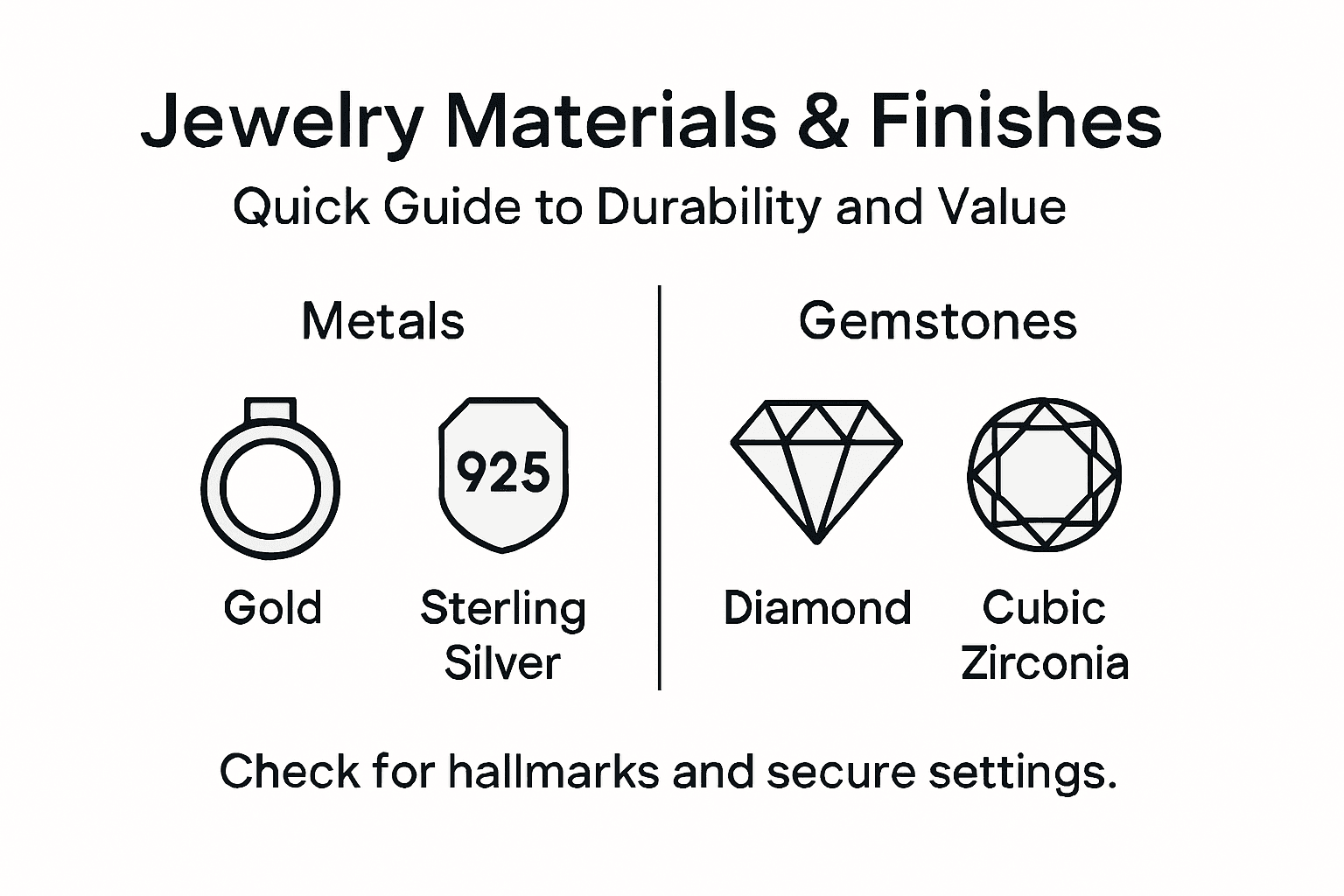
Gemstones and alternatives complete the picture. Natural diamonds cost significantly more but aren’t always necessary for sparkle. Quality alternatives like cubic zirconia deliver brilliant light-catching properties at a fraction of the price, making them ideal for everyday pieces you actually want to wear.
Beyond metals and stones, quality materials like sterling silver and cubic zirconia work beautifully together, balancing luxury aesthetics with wearability. The right material combination ensures your pieces look premium while handling daily life.
Use this summary to understand how materials and finishes impact jewelry:
| Material/Finish | Key Benefit | Typical Use |
|---|---|---|
| Sterling Silver | Affordable, durable | Everyday wear, casual pieces |
| Gold | Classic, tarnish-resistant | Heirloom and formal pieces |
| Platinum | Exceptional strength | High-end, durable jewelry |
| Cubic Zirconia | Brilliant, low-cost | Fashion and daily rings |
| Polished Finish | High shine, smooth feel | All visible surfaces |
| Enamel Coating | Adds color, protects base | Artisanal statement items |
The Finishing Process
Finishing techniques determine the final appearance and durability of every piece. Here’s what transforms raw materials into jewelry you love:
- Polishing: Creates brilliance and smoothness by removing surface imperfections
- Soldering: Joins metal components securely for lasting strength
- Cleaning: Removes residue from crafting to reveal true shine
- Texturing: Adds visual depth through carving, embossing, or intentional surface patterns
- Enameling: Applies durable color through heat-fused glass coatings
The finish isn’t just cosmetic—it’s what makes jewelry functional, comfortable, and visually compelling enough to wear every single day.
Proper finishing requires skill. A well-polished surface catches light beautifully and resists tarnishing longer. Secure soldering means your stones stay put through countless wearings. Quality finishing balances space and mass so pieces feel right against your skin.
These techniques work together to create jewelry that responds beautifully to movement. When you wear a well-finished piece, it moves with you naturally instead of feeling stiff or uncomfortable.
Pro tip: When evaluating jewelry, run your fingers along the surface and check stone settings closely—smooth, even polishing and perfectly secure stones indicate finishing that will stand up to your lifestyle.
How Craftsmanship Affects Wear And Value
Quality craftsmanship doesn’t just make jewelry look prettier. It determines how long your pieces actually last, how they feel on your body, and whether they’re still worth wearing five years from now.
When you invest in well-crafted jewelry, you’re not just paying for appearance. You’re paying for durability, comfort, and pieces that hold their appeal through countless wearings.
How Craftsmanship Impacts Durability
Skilled manual labor strongly influences the durability and perceived value of jewelry pieces. Thoughtful artisans exercise detailed control over every step, ensuring components fit together properly and stones stay secure.
Consider what happens over time with different construction methods:
- Hand-soldered joints: Hold strong through daily wear and movement
- Poorly set stones: Loosen gradually, eventually falling out
- Rushed polishing: Leaves micro-scratches that catch dirt and dull faster
- Secure wire wrapping: Distributes weight evenly so nothing breaks prematurely
- Careless assembly: Creates weak points that fail after months
A well-crafted necklace might feel slightly heavier—that weight comes from proper soldering, quality jump rings, and secure clasps. It feels better because it’s built right.
Value That Actually Lasts
Traditional craftsmanship preserves heritage and ensures items endure over time, creating pieces with sustained value. When artisans care about their work, it shows through longevity and emotional significance.
Mass-produced jewelry loses value quickly because it’s designed to be replaced. Quality pieces appreciate in your life because you wear them constantly, they fit perfectly, and they never disappoint you.
Craftsmanship creates pieces worth keeping, not pieces you’ll regret buying in six months.
Well-crafted everyday wear jewelry offers both immediate wearability and lasting appeal, balancing luxury aesthetics with practical durability. These pieces feel premium while handling real life.
The difference shows itself in small moments. A well-finished clasp doesn’t pinch. Properly polished surfaces catch light beautifully every single day. Secure stone settings mean you never worry about losing something precious.
When quality craftsmanship meets thoughtful material choices, you get jewelry that earns its place in your collection year after year.
Pro tip: Ask yourself if you’d want to wear this piece daily and if it would look good five years from now—if the answer is yes, the craftsmanship is likely solid enough to justify the investment.
Avoiding Common Pitfalls in Jewelry Selection
Most jewelry mistakes happen because of information gaps. You don’t need to become a gemologist, but knowing what to look for separates smart purchases from regrettable ones.
The good news? Understanding a few key factors transforms you from an uncertain buyer into someone who confidently selects pieces you’ll love.
Know Your Materials
Understanding materials and treatments helps you make informed purchases. This is where most confusion starts.
Here are the critical distinctions:
- Natural gemstones: Mined from the earth, each piece unique
- Laboratory-created stones: Chemically identical to natural but made in controlled conditions
- Imitation gemstones: Designed to look similar but lack durability and value
- Treated stones: Modified to improve appearance, which sellers must disclose
- Metal quality: Sterling silver, gold purity, and platinum all carry different costs and durability levels
Ask sellers directly about treatments and materials. Reputable brands disclose everything. If a seller seems vague, that’s a red flag.
Check Craftsmanship Quality Before Buying
Paying attention to craftsmanship quality prevents durability issues and aesthetic flaws. Rushed manufacturing shows in the finished piece.
Look for these signs of quality:
- Smooth, even polishing without visible scratches
- Secure stone settings with no wiggle or movement
- Clean soldering with no visible lumps or gaps
- Clasps that operate smoothly without catching
- Proper metal finishing throughout, not just on visible sides
Poor craftsmanship doesn’t get better with time—it gets worse.
Don’t rush your purchase. Examine pieces closely under good lighting. Run your fingers along surfaces. Check how settings hold stones. These moments reveal whether something’s built to last.
When choosing everyday jewelry, verify quality foundations so pieces withstand constant wear. Daily jewelry demands higher standards because you’ll notice every flaw quickly.
Avoid the temptation to buy something just because it’s on sale. A discounted piece with poor craftsmanship costs more in disappointment than money saved.
Pro tip: Before purchasing, ask the seller about specific manufacturing techniques used for that piece and request details about material certifications or guarantees—transparency indicates confidence in quality.
Discover Timeless Quality With SammiBee Jewelry
Finding jewelry crafted with true dedication and lasting quality can feel overwhelming. The challenge is spotting pieces made with genuine craftsmanship—where every soldered joint and polished surface reflects intentional care and expert skill. You want jewelry that not only shines brilliantly but stays beautiful through daily wear. SammiBee Jewelry offers exactly that with thoughtfully designed necklaces, bracelets, and earrings. Each piece blends high-quality materials like sterling silver and dazzling cubic zirconia with craftsmanship that honors durability and comfort.

Experience the difference of jewelry made to last beyond trends and fleeting flashes of sparkle. Visit SammiBee Jewelry now and invest in pieces designed to accompany you daily while reflecting your personal story. Shop now to enjoy free U.S. shipping and a 30-day hassle-free return policy that lets you wear confidence every day.
Frequently Asked Questions
What is the main difference between handcrafted and mass-produced jewelry?
Handcrafted jewelry is unique, made with attention to detail by skilled artisans, while mass-produced jewelry is identical and made using machines where precision takes precedence over individuality.
How does craftsmanship impact the durability of jewelry?
Quality craftsmanship ensures that each piece is constructed with care, leading to stronger connections, secure stone settings, and a finish that withstands daily wear, making it last longer compared to poorly crafted jewelry.
What materials are best for durable jewelry?
Precious metals like sterling silver, gold, and platinum, along with high-quality gemstones such as natural diamonds or cubic zirconia, are ideal choices for durable jewelry that maintains its appearance over time.
How can I identify high-quality craftsmanship in jewelry?
Look for smooth and even polishing, secure stone settings, clean soldering, and overall attention to detail. Check for any visible imperfections or gaps that may indicate poor craftsmanship.
