

You wear your cubic zirconia jewelry every day, but lately it looks dull and lifeless. Oils, lotions, and daily grime dim that brilliant sparkle you fell in love with. The good news? You can safely restore your jewelry’s shine at home with a simple, effective cleaning workflow. This guide walks you through gentle step-by-step cleaning, common mistakes to avoid, smart storage tips, and when to seek professional help so your pieces stay stunning.
Table of Contents
- Key Takeaways
- Prerequisites: What You Need Before You Start
- Basic Cleaning Steps for Safe and Effective Sparkle Restoration
- Deep Cleaning Options for Stubborn Buildup
- Common Mistakes and How to Avoid Them
- Storage and Maintenance Tips to Preserve Sparkle Between Cleanings
- When to Seek Professional Cleaning and Repair
- Expected Outcomes and How to Measure Cleaning Success
- Discover Affordable Luxury Jewelry & Care Tips at SammiBee
- Frequently Asked Questions
Key Takeaways
| Point | Details |
|---|---|
| Use gentle cleaning workflow | Mild soap and soft brushing preserve sparkle without damaging stones or settings. |
| Clean every 1-2 weeks | Regular cleaning every 1-2 weeks prevents buildup and maintains brilliance. |
| Avoid harsh chemicals | Bleach, undiluted ammonia, and abrasive tools risk permanent damage. |
| Store properly | Soft pouches prevent scratches and tangling between cleanings. |
| Know when to get help | Loose stones or persistent buildup require professional care. |
Prerequisites: What You Need Before You Start
Before cleaning your cubic zirconia jewelry, gather the right supplies and create a safe workspace. You need mild dish soap, a soft-bristle toothbrush dedicated for jewelry, a microfiber or lint-free cloth, a clean bowl, and access to lukewarm running water. These basic household items work beautifully without expensive specialty products.
For occasional deep cleaning when mild soap isn’t enough, prepare a diluted ammonia solution using 1 part clear ammonia to 6 parts water. This stronger mixture tackles stubborn grime safely when used sparingly. Always mix fresh solution and discard after use.
Understanding what to avoid is equally important. Harsh chemicals and abrasive tools damage cubic zirconia and the metal settings that hold stones secure. Never use bleach, undiluted ammonia, baking soda paste, or rough scrubbing pads. Steel wool and stiff brushes scratch surfaces and loosen prongs.
Set up your workspace near a sink with good lighting so you can see dirt and residue clearly. Lay down a soft towel to catch any dropped pieces. Having everything ready before you start makes the jewelry care workflow smooth and stress-free.
Essential Cleaning Supplies:
- Mild dish soap (unscented preferred)
- Soft-bristle toothbrush (new, dedicated for jewelry)
- Microfiber or lint-free cloth
- Clean glass or ceramic bowl
- Lukewarm water (not hot)
- Optional: clear ammonia for deep cleaning
Pro Tip: Label your jewelry toothbrush and store it separately from bathroom brushes. This prevents cross-contamination and ensures you always use the gentlest bristles.
| Supply | Purpose | Avoid |
|---|---|---|
| Mild dish soap | Gentle cleaning agent | Bleach, harsh detergents |
| Soft-bristle brush | Reaches crevices safely | Steel wool, stiff brushes |
| Microfiber cloth | Lint-free drying and polishing | Paper towels (leave lint) |
| Lukewarm water | Safe rinsing temperature | Hot water (risks loosening stones) |
Basic Cleaning Steps for Safe and Effective Sparkle Restoration
The foundation of cubic zirconia care is regular, gentle cleaning with soap and water. This simple method removes most buildup without risking damage to stones or settings. Start by preparing your cleaning solution in a clean bowl.
Mix a few drops of mild dish soap into warm (not hot) water until it creates light suds. Soak your cubic zirconia jewelry in this warm, soapy water for 10-15 minutes to loosen dirt, oils, and cosmetic residue. The soaking time softens buildup without requiring harsh scrubbing.
After soaking, take your soft-bristle toothbrush and gently brush each piece. Pay special attention to the back of stones where oils accumulate, between prongs, and in chain links where dirt hides. Use light circular motions rather than aggressive back-and-forth scrubbing. The goal is lifting dirt, not scratching metal or loosening settings.
Rinse thoroughly under lukewarm running water until all soap residue disappears. Soap film dulls sparkle just as much as dirt does. Hold pieces securely or rinse over a bowl to prevent accidental drops down the drain.
Immediately dry your jewelry with a soft, lint-free cloth. Pat gently rather than rubbing hard. Never air dry cubic zirconia jewelry because water spots form and attract new dust. Proper drying restores that brilliant, just-purchased cubic zirconia sparkle.
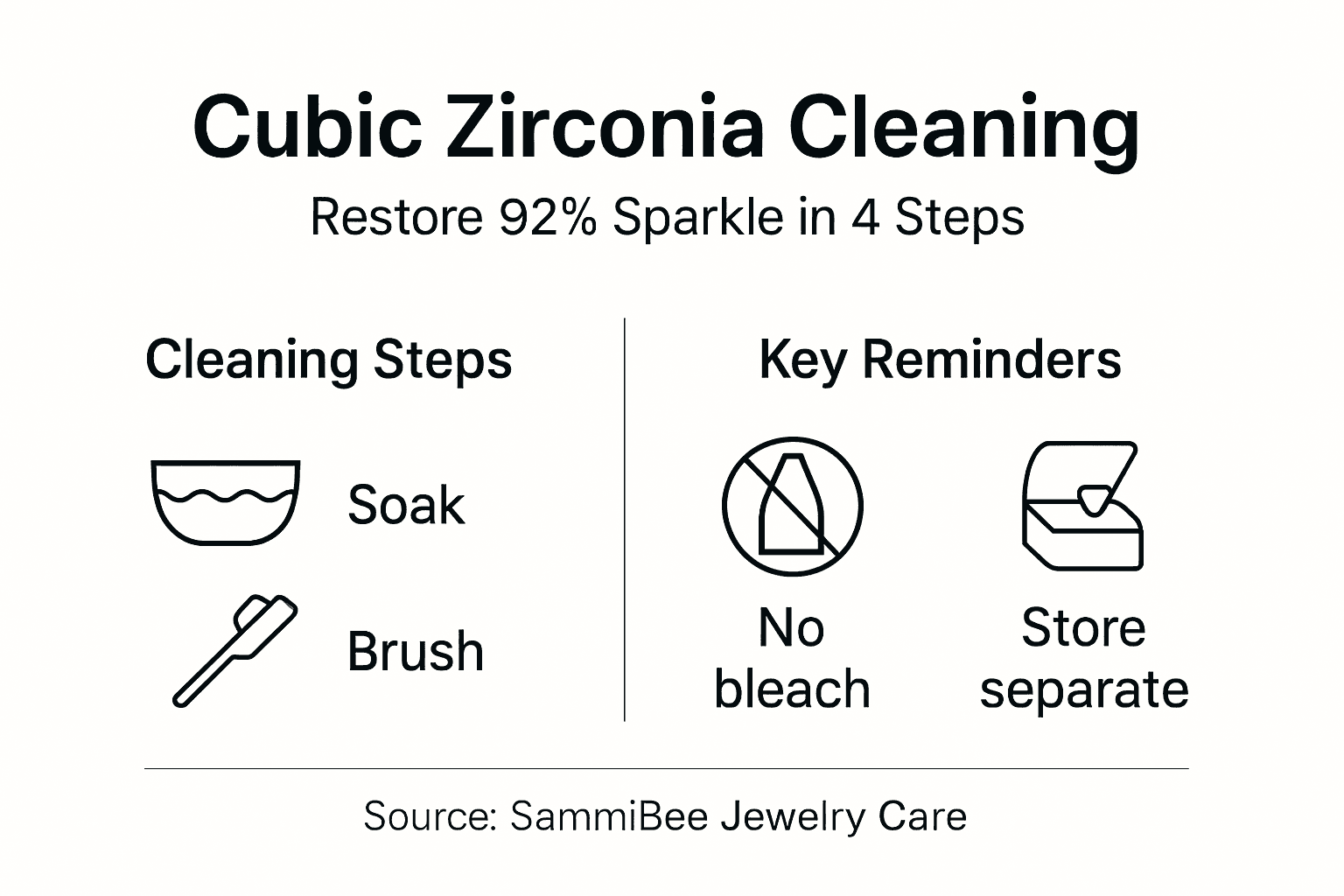
Step-by-Step Cleaning Process:
- Mix mild soap with warm water in a clean bowl
- Soak jewelry for 10-15 minutes to loosen buildup
- Brush gently with soft-bristle toothbrush, focusing on crevices
- Rinse thoroughly under lukewarm running water
- Dry immediately with lint-free cloth, no air drying
Pro Tip: Clean your jewelry before bed so it dries completely overnight. This prevents wearing damp pieces that attract dust and oils faster.
Cleaning frequency of every 1-2 weeks for regular wear prevents heavy buildup and maintains consistent sparkle. If you wear certain pieces daily, weekly cleaning keeps them looking their best. Occasional-wear jewelry can go longer between cleanings.
Deep Cleaning Options for Stubborn Buildup
Sometimes mild soap isn’t enough. Heavy buildup from lotions, sunscreen, or months of wear requires a stronger approach. A diluted ammonia solution safely tackles persistent grime when used correctly and sparingly.
Prepare your deep cleaning solution by mixing 1 part clear household ammonia with 6 parts water in a glass bowl. Never use undiluted ammonia, which can damage stone coatings and loosen settings. This diluted ammonia soak effectively removes stubborn buildup when gentler methods fail.
Limit ammonia soak to no longer than 10 minutes to protect your jewelry. Prolonged exposure risks weakening adhesives used in some settings. Set a timer to avoid accidentally over-soaking pieces.
After soaking, use your soft-bristle brush to gently scrub away loosened grime. The ammonia solution does most of the work, so you need minimal pressure. Focus on areas where buildup is most visible, typically around prongs and on stone backs.
Rinse extremely thoroughly under running lukewarm water for at least 30 seconds per piece. Ammonia residue must be completely removed to prevent cloudiness and skin irritation. Dry immediately with your lint-free cloth as you would after basic cleaning.
Deep Cleaning Steps:
- Mix 1 part ammonia with 6 parts water in glass bowl
- Soak jewelry maximum 10 minutes (set timer)
- Brush gently to remove loosened buildup
- Rinse thoroughly for 30+ seconds per piece
- Dry completely with lint-free cloth
Pro Tip: Reserve ammonia cleaning for truly stubborn situations, not weekly maintenance. Overuse increases risk of damage to affordable luxury jewelry over time. Most pieces need this treatment only 2-3 times per year.
Always work in a well-ventilated area when using ammonia. Open windows or turn on a fan to prevent fume buildup. If you have respiratory sensitivities, stick with soap and water or seek professional cleaning instead.
Common Mistakes and How to Avoid Them
Even well-intentioned cleaning can damage cubic zirconia jewelry. Understanding common errors protects your investment and preserves that brilliant shine you love.
Harsh chemicals like bleach and undiluted ammonia damage stones and settings permanently. Bleach causes discoloration and weakens metal. Undiluted ammonia strips protective coatings some manufacturers apply. Stick to mild soap for routine cleaning and properly diluted ammonia only when necessary.
Abrasive tools seem like they’d work faster, but they cause irreversible harm. Steel wool, rough sponges, and stiff brushes scratch both stones and metal. These scratches dull sparkle and create crevices where dirt accumulates faster. Always use the softest brush available.
Ultrasonic cleaners can loosen cubic zirconia stones unless a jeweler has verified your settings are secure. The vibrations dislodge stones from weakened prongs. If you want ultrasonic cleaning, have a professional inspect your jewelry first and perform the service.
Soap residue is surprisingly common and just as problematic as dirt. Insufficient rinsing leaves a film that attracts dust and dulls shine. Always rinse until water runs completely clear and no slippery feeling remains.
Wearing jewelry while applying cosmetics, lotions, or hairspray creates the buildup you’re trying to prevent. These products contain chemicals and oils that coat stones and dim brilliance. Make jewelry the last thing you put on and first thing you remove.
Mistakes That Damage Jewelry:
- Using bleach or undiluted ammonia on any jewelry
- Scrubbing with abrasive pads, steel wool, or stiff brushes
- Ultrasonic cleaning without professional setting inspection
- Incomplete rinsing that leaves soap or chemical residue
- Wearing jewelry during cosmetic application or swimming
“Many people assume that if a little cleaning solution is good, more must be better. The opposite is true. Gentle, diluted solutions applied correctly outperform harsh chemicals every time while protecting your jewelry’s integrity.”
Avoid the temptation to speed up the process by using hot water or harsh scrubbing. Patience and gentleness deliver better results. Following proper jewelry care workflows prevents damage that professional repair can’t always fix.
Storage and Maintenance Tips to Preserve Sparkle Between Cleanings
Cleaning restores sparkle, but proper daily care prevents rapid re-soiling. Small habits make a dramatic difference in how long your cubic zirconia jewelry stays brilliant.
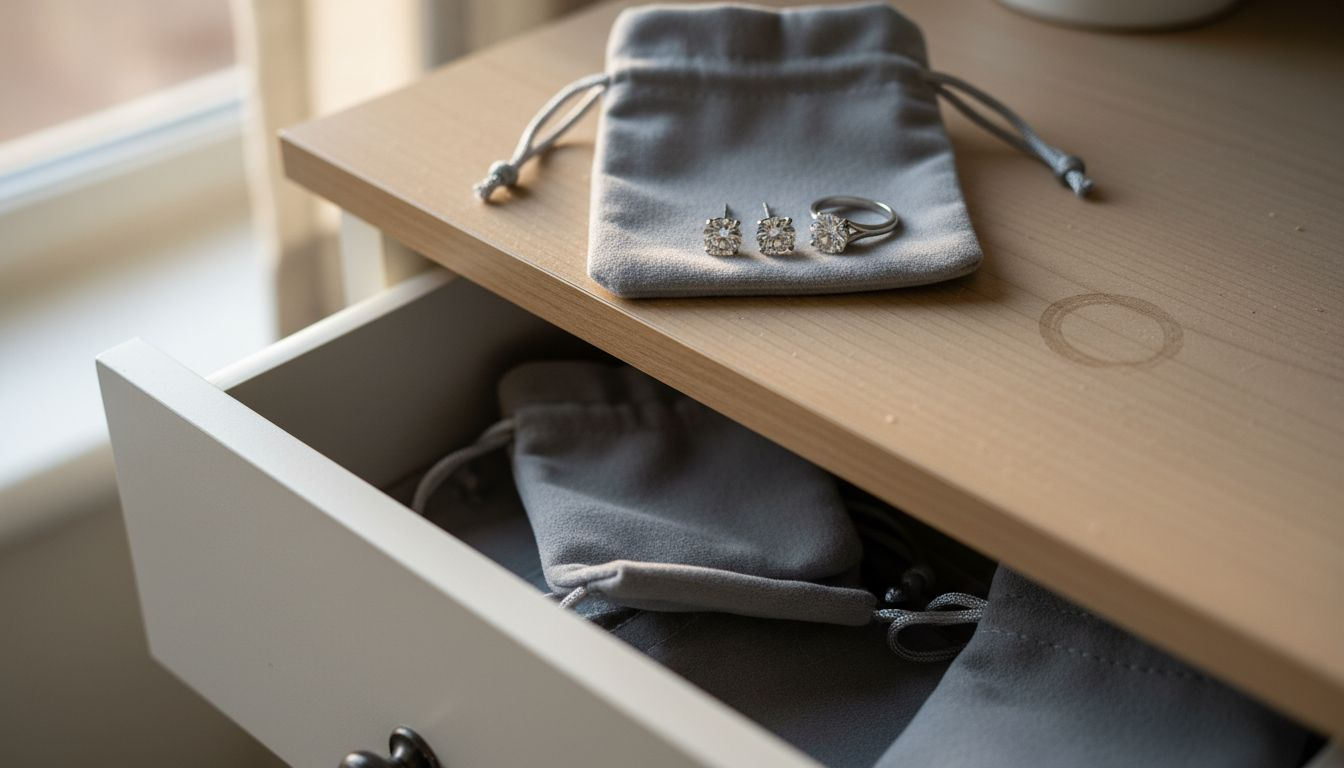
Store cubic zirconia pieces separately in soft cloth or jewelry pouches to prevent scratching. Metals scratch softer metals, and even cubic zirconia can chip if pieces knock together. Individual storage also prevents chain tangling that frustrates and wastes time.
Remove all jewelry before applying lotions, perfumes, sunscreen, or hairspray. These products dull sparkle and create the stubborn buildup that requires deep cleaning. Make jewelry the final step in your morning routine and the first thing removed at night.
Wait until cosmetics and hair products fully dry before putting on jewelry. Even after products seem dry, residual chemicals can transfer to stones and metal. A 5-minute wait prevents hours of buildup.
Between cleanings, quickly polish your jewelry with a microfiber cloth after each wear. This simple 10-second step removes fresh oils and dust before they bond to surfaces. Regular polishing extends time between deep cleanings significantly.
Consider your storage method carefully based on your collection size and wear patterns:
| Storage Method | Protection Level | Best For | Drawbacks |
|---|---|---|---|
| Individual soft pouches | Excellent | All jewelry types, frequent travelers | Requires drawer or box space |
| Jewelry box with compartments | Very good | Large collections, home storage | Can be bulky, compartments may be too small |
| Open tray or dish | Poor | Display purposes only | Pieces scratch each other, dust accumulation |
| Hanging organizer | Good | Necklaces, prevents tangling | Exposed to air and dust |
Daily Care Habits:
- Put jewelry on last, after all cosmetics and hair products
- Remove jewelry first when coming home
- Wipe with microfiber cloth after each wear
- Store in individual pouches or compartments
- Keep jewelry away from bathroom humidity
Pro Tip: Dedicate a small dish near your jewelry storage for pieces that need cleaning soon. When you notice reduced sparkle, drop the piece in the dish as a reminder. Clean everything in the dish during your next jewelry care session.
Proper storage protects your jewelry investment and reduces cleaning frequency. Pieces stored correctly stay cleaner longer and maintain their sparkle with less effort. Review our fine jewelry storage guide for additional tips on organizing and protecting your collection. Understanding the role of cubic zirconia in jewelry helps you appreciate why these care steps matter.
When to Seek Professional Cleaning and Repair
Home cleaning handles most maintenance, but certain situations require professional expertise. Recognizing these signs protects your jewelry from further damage.
Loose stones or bent prongs need immediate professional attention. Professional cleaning is advised when stones loosen, settings bend, or dirt persists beyond home methods. Continuing to wear jewelry with compromised settings risks losing stones permanently.
If tarnish or grime remains after proper cleaning attempts, the issue may involve damaged coatings or metal oxidation that home methods can’t address. Jewelers have specialized equipment and solutions for these situations.
Visible scratches on stones or metal from improper past cleaning require professional polishing. While you can’t undo damage, professionals can often minimize its appearance and restore much of the original shine.
For valuable or sentimental pieces, schedule annual or biannual professional inspections even if everything looks fine. Jewelers catch small problems like weakening prongs before they become expensive repairs. This preventive approach costs less than replacing lost stones.
Signs You Need Professional Help:
- Any stone movement when gently tapped or pressed
- Bent or damaged prongs and settings
- Persistent discoloration after multiple cleaning attempts
- Deep scratches on stones or metal surfaces
- Jewelry hasn’t been professionally inspected in 12+ months
Think of professional care as an investment in longevity. The small cost of inspection and occasional professional cleaning prevents the much larger expense of stone replacement or complete jewelry restoration. Quality affordable luxury jewelry deserves this level of attention.
When selecting a jeweler, choose one who works regularly with cubic zirconia and understands its specific properties. Not all jewelers treat cubic zirconia with the same care as natural diamonds, but it deserves equal attention to maintain its beauty.
Expected Outcomes and How to Measure Cleaning Success
After cleaning, your cubic zirconia jewelry should look dramatically different. Understanding what to expect helps you verify you’ve cleaned effectively and maintained jewelry health.
Properly cleaned jewelry sparkles with brilliance close to how it looked when new. Light should reflect sharply from stone facets without the diffused, cloudy appearance of dirty jewelry. Hold pieces at different angles under good lighting to verify consistent sparkle.
Inspect closely for soap residue, water spots, or remaining dullness. Run your finger across stones and metal; they should feel completely smooth without any slippery film. If you notice spots or residue, rinse again and dry more thoroughly.
Check that all stones remain secure in their settings. Gently tap each stone with your fingernail. Zero movement is normal; any shifting indicates a problem requiring professional attention before wearing the piece again.
Consistent cleaning every 1-2 weeks maintains sparkle over months and years. You’ll notice jewelry stays cleaner longer between sessions because you’re preventing heavy buildup. This consistency reduces the need for harsh deep cleaning methods.
Successful jewelry care workflows build confidence. You’ll feel comfortable handling and caring for your pieces, reducing anxiety about damage and expensive professional services. This confidence encourages you to wear your jewelry more often, which is the whole point of owning beautiful pieces.
Success Indicators:
- Brilliant sparkle matching or approaching new-purchase appearance
- Zero visible soap residue or water spots
- Completely dry jewelry with no moisture in crevices
- All stones secure with no movement in settings
- Smooth feel with no slippery film remaining
If cleaning doesn’t restore expected sparkle after following all steps correctly, the issue may be permanent damage from past harsh treatment or a stone quality concern. In these cases, professional assessment determines whether restoration is possible.
Discover Affordable Luxury Jewelry & Care Tips at SammiBee
Now that you know how to keep your cubic zirconia jewelry sparkling, explore pieces worthy of this care. SammiBee offers thoughtfully designed affordable luxury jewelry crafted from sterling silver and brilliant cubic zirconia. Each piece delivers the look and feel of fine jewelry at accessible prices.

Our blog provides expert tips on maintaining that lasting sparkle through proven jewelry care workflows. From cleaning techniques to storage solutions, you’ll find everything needed to protect your investment. Browse our luxury necklaces collection to find pieces that complement your style. With free U.S. shipping and a 30-day return policy, you can shop confidently knowing your jewelry will stay beautiful for years.
Frequently Asked Questions
How often should I clean my cubic zirconia jewelry if worn occasionally?
Clean monthly or after each heavy wear session to maintain sparkle without unnecessary exposure to cleaning solutions. Occasional pieces accumulate less buildup than daily-wear jewelry. Adjust your cleaning frequency based on visible dullness or how much the piece contacts skin oils and cosmetics.
Is it safe to use household cleaners other than soap and ammonia?
Avoid bleach, undiluted ammonia, and abrasive cleaners completely; they damage cubic zirconia stones and settings. Stick exclusively to mild dish soap for routine cleaning and properly diluted ammonia for occasional deep cleaning. Other household cleaners contain harsh chemicals that cause irreversible damage.
Can I wear cubic zirconia jewelry in the shower or swimming?
Remove all cubic zirconia jewelry before showering or swimming to prevent chemical exposure and buildup. While water alone won’t harm stones, soaps, shampoos, and pool chemicals coat surfaces and dull sparkle rapidly. Chlorine and salt water accelerate tarnishing of metal settings.
What is the best tool to remove buildup in hard-to-reach places?
Use a soft-bristle toothbrush dedicated exclusively to jewelry cleaning for gentle yet effective dirt removal from crevices. The soft bristles reach between prongs and into chain links without scratching. Avoid stiff brushes that damage stones and metal. Follow our gentle brushing techniques for best results.
How can I tell if a cubic zirconia stone is loose?
Gently tap each stone with your fingernail and watch for any movement or wiggling. Loose stones shift slightly when pressed, while secure stones remain completely still. Inspect settings visually for bent prongs or gaps around stones. Visit a jeweler immediately if you notice signs of loose stones to prevent loss.