

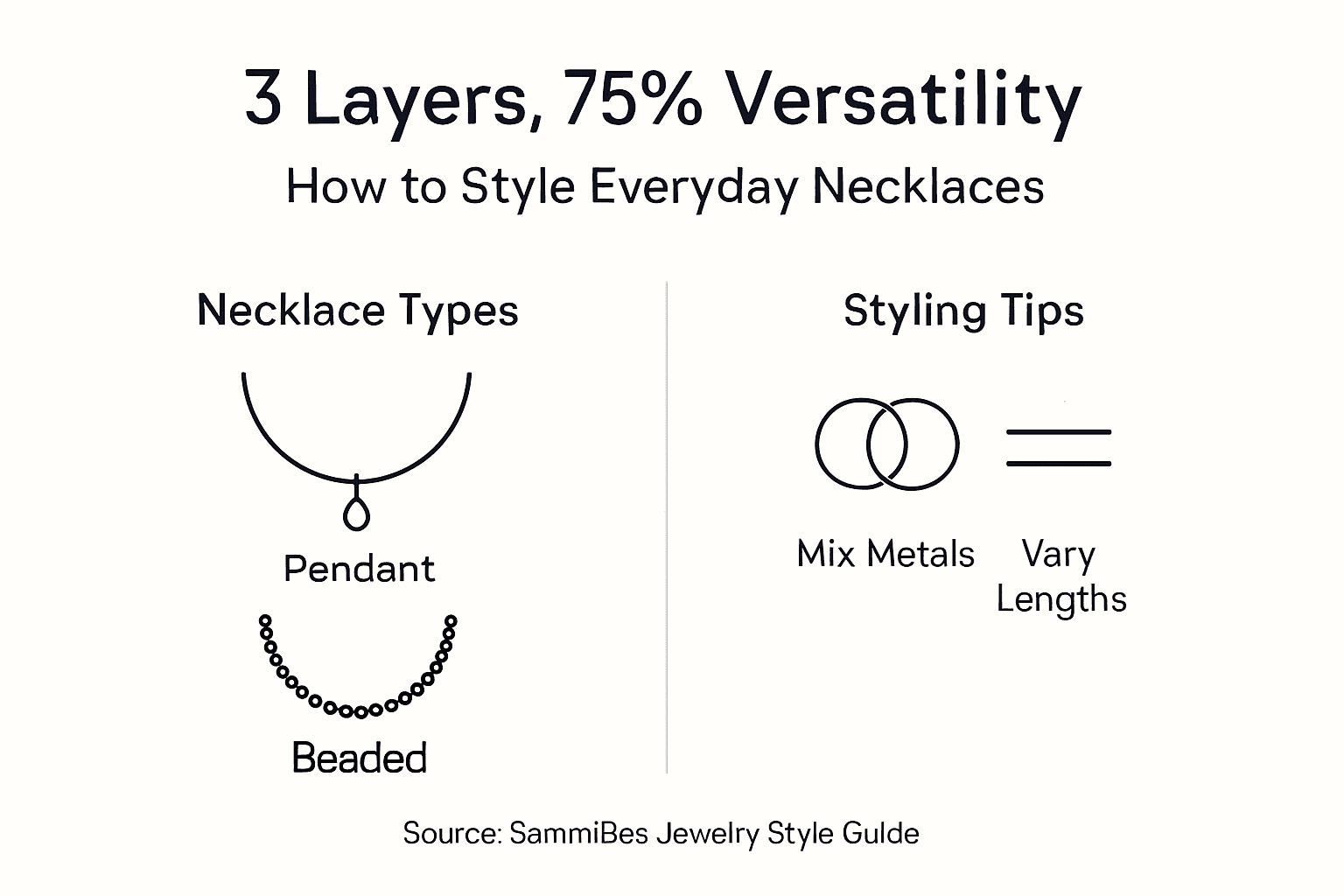
Finding the perfect everyday necklace shouldn’t feel like a gamble. You want pieces that won’t weigh down your neck, tangle by lunch, or clash with half your wardrobe. The good news? Mastering comfortable, versatile necklace styling takes just three well-chosen layers and a few simple techniques that work with most of your outfits, building confidence without the guesswork.
Table of Contents
- What You Need Before You Start: Materials, Comfort, and Versatility
- Step 1: Choosing Necklaces That Match Your Wardrobe and Lifestyle
- Step 2: Mastering the Art of Layering Your Necklaces
- Step 3: Styling Necklaces to Your Outfit Neckline
- Common Mistakes and How to Fix Them
- Expected Results: How to Know You’ve Styled Right
- Discover Your Perfect Everyday Necklaces at SammiBee
- Frequently Asked Questions
Key Takeaways
| Point | Details |
|---|---|
| Choose lightweight, quality materials | Sterling silver and beaded designs ensure all-day comfort and durability without irritation. |
| Layer three necklaces with close lengths | Use 16-inch, 17-18-inch, and slightly longer chains to create balanced, natural-looking layers. |
| Match necklaces to outfit necklines | Pair pendants with V-necks, chokers with crew necks, and statement pieces with off-shoulder tops. |
| Avoid overcrowding and poor clasps | Limit layers to three and choose secure closures to prevent tangling, breakage, and discomfort. |
| Aim for 75% wardrobe compatibility | Successful styling means your necklaces complement most outfits and feel effortless daily. |
What You Need Before You Start: Materials, Comfort, and Versatility
Before you think about layering or styling techniques, you need the right foundation. The best everyday necklaces disappear on your neck while making your outfit shine. That starts with materials.
Lightweight options are your best friend. Lightweight beaded necklaces are highly preferred for everyday wear because they reduce strain during long days. Heavy metals pull on your neck and cause discomfort by afternoon. Instead, look for sterling silver, 14k gold, or quality beaded designs that give you the luxury look without the weight.
Durability matters just as much as comfort. Sterling silver offers affordable elegance with lasting wear, resisting tarnish better than plated alternatives. Cubic zirconia stones provide brilliant sparkle that rivals diamonds at a fraction of the cost. These materials let you build a collection that looks expensive without draining your budget.
Secure clasps are non-negotiable. Lobster clasps and spring rings prevent frustrating breakage and loss. You want to wear your necklaces confidently, not worry about them falling off mid-meeting.
Versatility means each piece should work with multiple outfits. When choosing everyday jewelry, ask yourself: does this complement my work wardrobe, casual weekends, and dinner plans? If a necklace only works with one outfit, it’s not everyday material.
Pro Tip: Test comfort by wearing a necklace for a full day before committing to similar styles. If you forget you’re wearing it, that’s the sweet spot.
Prioritize these material qualities:
- Lightweight metals like sterling silver or thin gold chains
- Secure, easy-to-use clasps that won’t fail
- Hypoallergenic materials to prevent skin irritation
- Timeless designs that won’t look dated next season
- Quality construction that withstands daily wear
Step 1: Choosing Necklaces That Match Your Wardrobe and Lifestyle
Your everyday necklaces should reflect how you actually live, not some idealized version of your life. Start by analyzing your wardrobe honestly. What do you wear most often? Office blouses, casual tees, fitted dresses? Your jewelry should enhance these pieces, not sit unused in a drawer.
Minimalist pendants are workhorses. A simple geometric pendant or delicate stone on a thin chain works seamlessly from office presentations to weekend brunch. These styles sit close to your collarbone, staying professional while adding visual interest.
Sculptural and statement necklaces elevate simple outfits instantly. A chunky silver chain or bold pendant transforms a basic black tee into an intentional look. These pieces bridge casual and evening wear beautifully, giving you flexibility without changing your entire outfit.
Focus on the 75% rule. Your essential jewelry pieces should complement at least three-quarters of your wardrobe. If you wear neutrals mostly, gold or silver pendants are safe bets. If you love prints and colors, choose necklaces with clean lines that won’t compete for attention.
Consider your daily activities when selecting styles. Do you spend hours at a computer? Avoid long necklaces that swing forward and distract you. Are you constantly moving? Skip delicate chains that tangle easily. Choose durability that matches your lifestyle demands.
Versatility maximizes both utility and value. Three carefully chosen necklaces that work across occasions beat ten pieces you rarely wear. When choosing everyday jewelry, think about cost per wear rather than upfront price.
Build your collection around these versatile styles:
- Simple pendant necklace for professional and casual wear
- Slightly longer chain for layering depth
- Statement piece for elevating basic outfits
- Beaded or textured design for added interest
Step 2: Mastering the Art of Layering Your Necklaces
Layering transforms individual necklaces into a cohesive, personalized look. The secret is restraint. Modern everyday jewelry styling encourages mixing metals and layering up to three pieces to create signature style without overwhelming your outfit.
Start with the three-necklace maximum rule. More than three creates visual clutter and increases tangling. Your layers should feel intentional, not accidental.
Length spacing is critical. Necklaces styled with close chain lengths like 16 inches, 17 to 18 inches, and slightly longer create elegant layering that moves naturally. Too much space between layers looks disjointed. Too little causes constant tangling.
Choose one focal necklace and two supporting layers. Your focal piece might be a pendant with visual weight or a textured chain. The supporting layers should be simpler, framing the focal point without competing. This creates hierarchy that guides the eye.
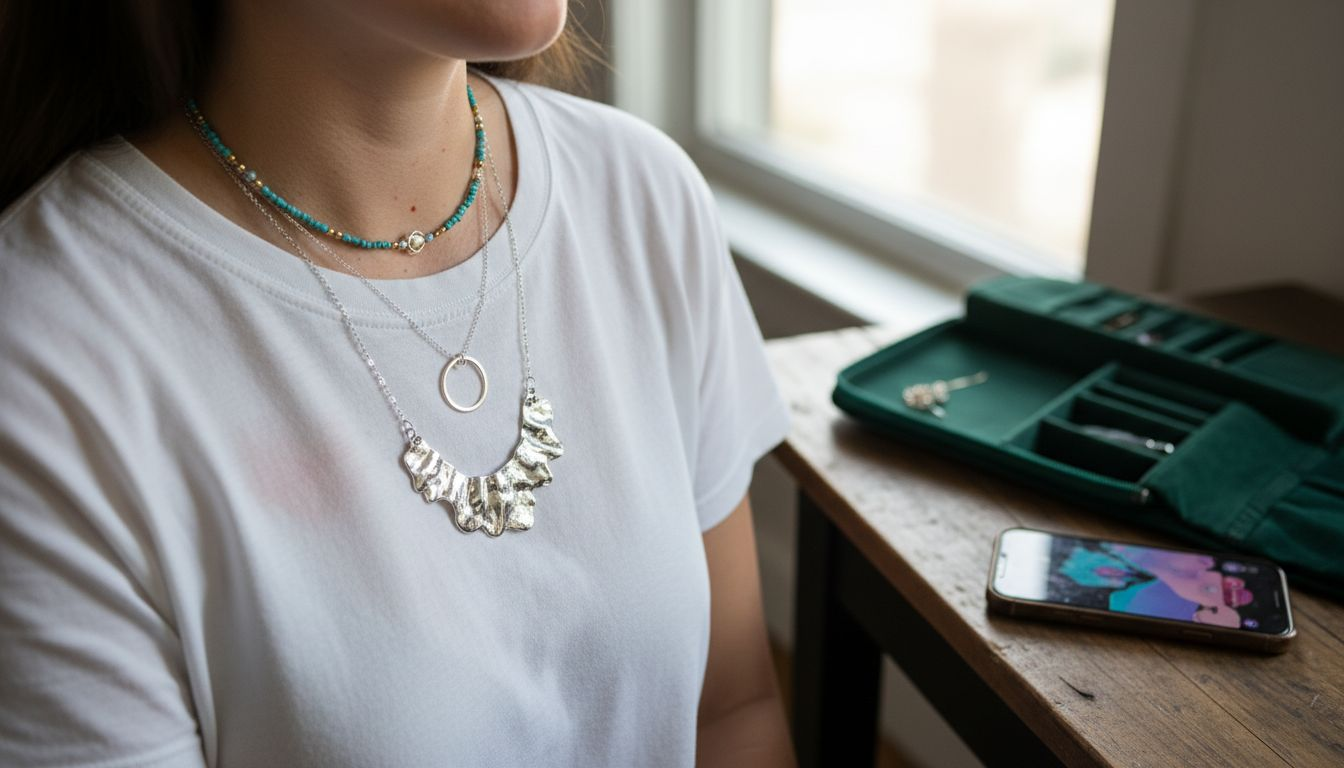
Mixing metals is not only acceptable but encouraged in 2026. Pairing gold and silver adds modern edge and expands outfit compatibility. Your jewelry doesn’t need to match perfectly. It needs to feel cohesive through intentional contrast.
Pro Tip: Layer your necklaces in order of increasing length. Put on the shortest first, then add longer pieces. This prevents tangling and makes removal easier.
Follow this layering formula:
- Base layer: 16-inch simple chain or choker
- Middle layer: 17 to 18-inch pendant or charm
- Longest layer: 20 to 22-inch delicate chain or beaded design
Proper layering results in a natural, comfortable aesthetic that looks effortless. Your necklaces should cascade gently, creating dimension without weight. When you nail the technique, people notice your style, not individual pieces.
Research shows: 68% of women report increased confidence when wearing jewelry that complements their personal style, according to styling experts analyzing everyday jewelry trends.
The goal is creating a signature look you can replicate quickly. Once you find your perfect three-necklace combination, getting ready takes seconds. You’re not starting from scratch each morning.
Step 3: Styling Necklaces to Your Outfit Neckline
Your neckline dictates which necklaces work and which fight for attention. Matching necklace style and length to your top creates polish that elevates any outfit.
V-neck tops naturally pair with pendant necklaces. The pendant follows the neckline’s angle, creating visual harmony. Choose a pendant that ends just above where the V closes. This draws attention to your face while complementing the top’s lines.
Crew necks suit chokers or short collar necklaces. These styles sit above the neckline, creating layered depth without hiding under fabric. You can add a longer pendant for dimension, but keep the base layer visible and close to your neck.
Off-shoulder and boat neck tops showcase your collarbone beautifully. Statement and sculptural silver necklaces work perfectly here, with soft, rounded forms adding modern elegance. Chunky chokers or wide collar necklaces make bold statements that bare necklines can support.
Scoop necks offer flexibility. Mid-length pendants in the 18 to 20-inch range fill the space nicely without overwhelming. Layer a shorter choker underneath for added interest.
| Neckline Type | Best Necklace Style | Ideal Length |
|---|---|---|
| V-neck | Pendant matching angle | 16-18 inches |
| Crew neck | Choker or short collar | 14-16 inches |
| Off-shoulder | Statement or chunky choker | 14-16 inches |
| Scoop neck | Mid-length pendant | 18-20 inches |
| Turtleneck | Long pendant or opera length | 24+ inches |
The key is complementing, not competing. Your necklace should enhance the neckline’s shape, creating a complete look. When done right, the jewelry and outfit feel inseparable.
Pro Tip: Take a photo of yourself in different necklace and neckline combinations. You’ll quickly see which pairings look polished versus which feel off.
Consider these neckline styling tips for daily success:
- High necklines need longer chains to avoid a crowded look
- Deep V-necks can handle longer, dramatic pendants
- Asymmetric necklines pair well with single-strand, off-center pendants
- Halter tops work best with no necklace or delicate back chains
Common Mistakes and How to Fix Them
Even with good intentions, necklace styling can go wrong. Recognizing these mistakes helps you refine your approach quickly.
Overcrowding is the most common error. Wearing more than three necklaces creates visual chaos. Your neck looks cluttered, and the individual beauty of each piece disappears. Stick to three layers maximum. If you want more jewelry, add earrings or bracelets instead.
Poor length spacing ruins layering. Necklaces that are too similar in length tangle constantly. Those with huge gaps look disconnected. Maintain 1 to 2-inch differences between each layer for optimal flow.
Weak or complicated clasps cause daily frustration. Necklaces that break easily or take forever to fasten won’t get worn. Invest in secure lobster clasps or magnetic closures that work smoothly. Your time and peace of mind are worth it.
Low-quality materials lead to skin irritation and rapid tarnishing. Cheap metals turn your neck green and deteriorate quickly. Sterling silver and quality gold plating cost more upfront but last years longer. Calculate cost per wear, not just initial price.
Ignoring your wardrobe’s actual colors is another pitfall. If you wear warm tones constantly, cool-toned silver might clash. Pay attention to what you reach for most often when avoiding common necklace mistakes.
Pro Tip: Keep a small jewelry pouch in your bag with your everyday necklaces. This prevents damage and lets you adjust styling throughout the day based on comfort or outfit changes.
Fix these issues systematically:
- Remove one necklace if your layers feel heavy or tangled
- Adjust chain lengths by 1 to 2 inches for better spacing
- Replace any necklace with a weak clasp immediately
- Clean your necklaces monthly to maintain their appearance
- Rotate pieces to prevent wearing the same combination repeatedly
Refining your approach based on real-world feedback makes styling easier over time. Pay attention to which combinations you reach for repeatedly. Those are your winners.
Expected Results: How to Know You’ve Styled Right
Successful everyday necklace styling has clear indicators. You shouldn’t guess whether you’ve nailed it. These measurable signs confirm you’re on track.
Your necklaces should complement at least 75% of your wardrobe. If you constantly swap pieces or avoid certain outfits because your jewelry doesn’t work, something’s off. True versatility means grabbing your go-to layers and knowing they’ll enhance whatever you’re wearing.
Layers should fall naturally without constant adjustment. If you’re tucking necklaces back into place or untangling chains throughout the day, the lengths or weights are wrong. Properly styled pieces stay put and move with you comfortably.
You wear your jewelry confidently without overthinking. When styling becomes second nature, you’ve found your formula. You’re not standing in front of the mirror debating choices. You know what works.
Your accessories feel like a natural extension of your personal style. They express who you are rather than following trends blindly. When people compliment your look, they mention your overall style, not individual pieces.
“The right everyday jewelry becomes invisible in the best way. You forget you’re wearing it, but you feel more put together and confident all day long.”
Positive feedback confirms success. Friends asking where you got a piece or compliments on your styling signal you’re doing something right. External validation isn’t everything, but consistent positive responses indicate strong choices.
Measure your success through these everyday jewelry confidence markers:
- Wearing the same three-necklace combination at least twice weekly
- Receiving compliments on your overall style regularly
- Feeling comfortable and confident throughout long days
- Spending less than two minutes selecting jewelry each morning
- Rarely adjusting or fixing necklaces after initial styling
When these indicators align, you’ve mastered everyday necklace styling. Your jewelry enhances your life rather than complicating it. That’s the ultimate goal.
Discover Your Perfect Everyday Necklaces at SammiBee
Ready to build your versatile everyday collection? We’ve curated necklaces designed specifically for comfort, durability, and effortless style. Each piece uses premium materials like sterling silver and brilliant cubic zirconia, giving you the luxury look without the fine jewelry price.
Our detailed guides help you understand the role of jewelry in daily style and make confident choices. Whether you’re starting fresh or refining your collection, we provide the quality pieces and expert advice to transform your everyday look. Explore choosing everyday jewelry strategies and discover ways to style everyday jewelry that work for your unique lifestyle.
Frequently Asked Questions
What’s the best way to clean everyday necklaces for longevity?
Use mild soap and warm water with a soft cloth for regular cleaning. Gently wipe your necklaces after wearing to remove oils and dirt. Avoid harsh chemicals, ultrasonic cleaners, or abrasive materials that can damage delicate metals and beads. Store pieces separately in a jewelry box to prevent scratching.
Can I wear everyday necklaces while exercising or sweating?
It’s best to remove necklaces during intense exercise to prevent damage from sweat, impact, or tangling. Moisture accelerates tarnishing and weakens clasps over time. If you prefer wearing jewelry during mild activity like walking, choose sweat-resistant materials like sterling silver and ensure clasps are secure.
How do I decide between gold, silver, or mixed metals for daily wear?
Mixing metals is completely trendy in 2026 and allows genuine personal style expression. Choose metals that complement your skin tone: warmer tones suit gold, while cooler tones pair well with silver. Consider your existing wardrobe pieces and which metal appears most frequently in your clothing hardware and accessories.