

Many women find themselves confused when shopping for jewelry, unsure whether they’re buying a piece that will last or simply a trendy accessory. The distinction between fine jewelry and fashion pieces isn’t always clear, yet understanding these differences empowers you to make smarter purchasing decisions. This guide reveals what truly defines fine jewelry and introduces affordable luxury alternatives that deliver lasting style without the premium price tag, helping you build a versatile collection you’ll actually wear.
Table of Contents
- Introduction To Fine Jewelry
- Materials And Craftsmanship That Define Fine Jewelry
- Price, Value Retention, And Investment Potential
- Fine Jewelry Vs. Affordable Luxury Jewelry: What’s The Difference?
- Common Misconceptions About Fine Jewelry
- Selecting And Caring For Affordable Luxury Jewelry
- Conclusion: Bridging Fine Jewelry And Everyday Luxury
- Explore Affordable Luxury Jewelry At SammiBee
- Frequently Asked Questions About Fine Jewelry
Key Takeaways
| Point | Details |
|---|---|
| Fine jewelry uses precious metals and genuine gemstones with superior craftsmanship | Gold, platinum, and natural stones distinguish fine pieces from costume jewelry |
| Material quality and finishing determine durability and long-term value | Higher quality materials retain value better than fashion jewelry |
| Affordable luxury mimics fine jewelry’s aesthetic using sterling silver and synthetic stones | High-quality alternatives offer similar appearance at accessible prices |
| Common myths include believing only gold qualifies as fine jewelry | Sterling silver and proper craftsmanship can also create quality pieces |
| Selecting affordable luxury balances style, quality, and proper care routines | Versatile designs and maintenance extend wearability for everyday elegance |
Introduction to Fine Jewelry
Fine jewelry stands apart from costume pieces through its fundamental composition and construction methods. At its core, fine jewelry definitions include pieces crafted from precious metals like gold and platinum paired with genuine gemstones. This material authenticity creates intrinsic value that fashion jewelry simply cannot replicate.
The craftsmanship behind fine jewelry involves meticulous attention to detail. Skilled artisans hand finish each piece, ensuring smooth edges and secure settings that protect valuable stones. Unlike mass-produced fashion accessories, fine jewelry undergoes rigorous quality checks throughout production.
Precious metal content matters significantly. Gold jewelry comes stamped with karat markings indicating purity, while platinum pieces bear their own hallmarks. These marks serve as your guarantee of material authenticity.
Key characteristics of fine jewelry include:
- Precious metal composition (gold, platinum, or high-quality silver)
- Genuine gemstones rather than glass or plastic imitations
- Expert hand finishing and precise stone setting techniques
- Intrinsic material value independent of brand or design trends
- Durability designed for generational wear and potential heirloom status
The distinction becomes clearer when you examine construction quality. Fine jewelry features reinforced joints, secure clasps, and prong settings that firmly hold stones in place. Fashion pieces often use glue or weak pressure settings that fail over time.
“Fine jewelry represents an investment in both materials and artistry, where precious metals and gemstones combine with skilled craftsmanship to create pieces built for lasting beauty and wear.”
Understanding these core elements helps you recognize authentic quality when shopping. Whether you choose traditional fine jewelry or explore affordable luxury alternatives, knowing what defines excellence ensures your purchases deliver real value.
Materials and Craftsmanship that Define Fine Jewelry
Gold purity levels directly impact both durability and value in fine jewelry. The Jewelers of America standards establish that 14K gold contains 58.3% pure gold, while 18K contains 75%. These ratios balance precious metal content with strength needed for everyday wear.
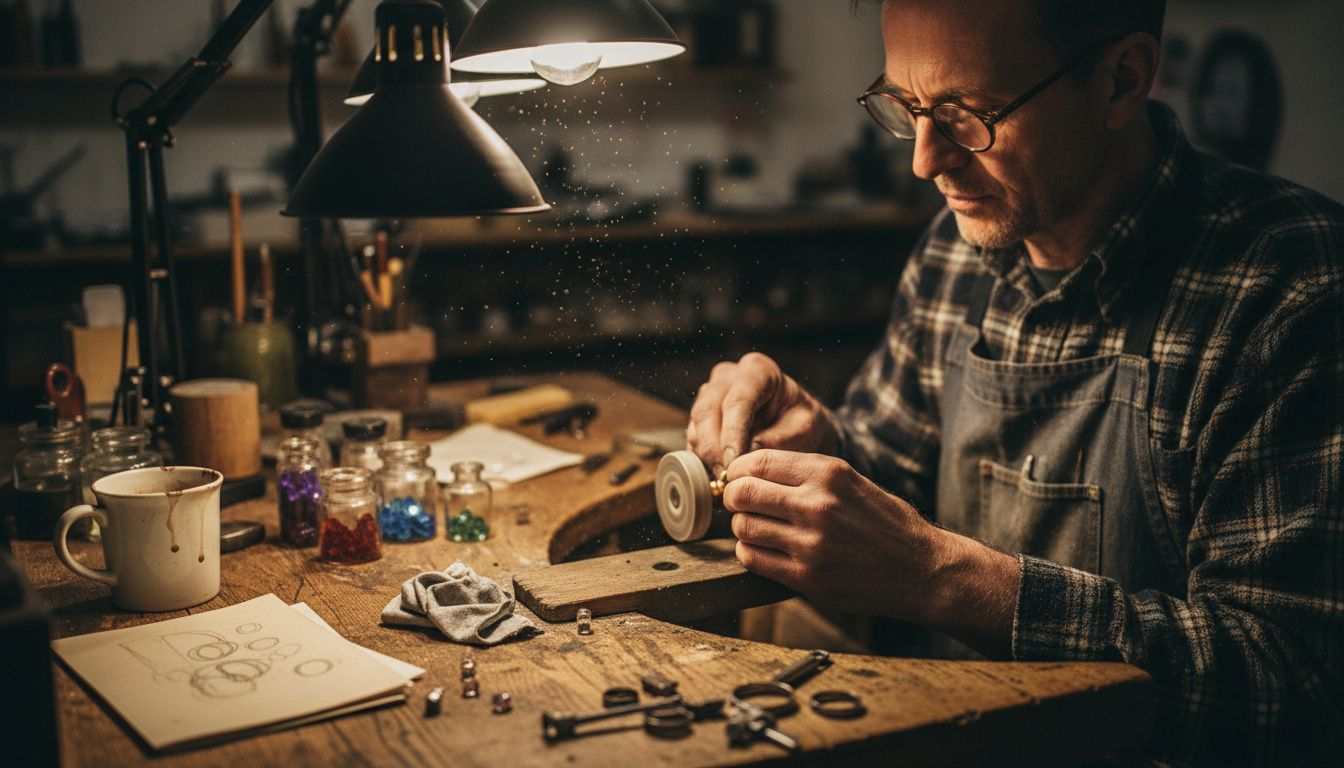
Platinum offers exceptional durability as the densest precious metal used in jewelry. Its natural white color never fades, and its weight gives pieces a luxurious feel. Platinum resists tarnish and wear better than gold, making it ideal for engagement rings and pieces you’ll wear daily.
Gemstone selection involves more nuance than many realize. Natural stones carry geological rarity, but high-quality laboratory-created stones can appear in fine jewelry when set with proper craftsmanship quality insights. The key lies in transparency about stone origins and the skill applied in setting them.
Essential craftsmanship elements in fine jewelry:
- Hand finishing that smooths all surfaces and edges for comfortable wear
- Precise prong or bezel settings that secure gemstones without gaps
- Reinforced joints at stress points like ring shanks and bracelet links
- Proper metal thickness ensuring structural integrity over years of wear
- Quality control checks at multiple production stages
The setting technique reveals craftsmanship quality instantly. Prongs should grip stones firmly with even spacing and smooth tips that won’t snag fabric. Bezel settings require perfect metal flow around stone perimeters. Poor execution shows in loose stones, uneven prongs, or visible gaps.
Soldering quality matters more than most buyers realize. Strong, invisible solder joints ensure pieces withstand daily stress. Weak joints cause rings to bend, chains to break, and settings to twist out of alignment.
Pro Tip: Examine jewelry under bright light and use a jeweler’s loupe if available. Quality pieces show consistent metal thickness, smooth solder joints, and secure stone settings with no visible gaps or rough edges.
Polishing represents the final craftsmanship step. Fine jewelry receives mirror finishes on smooth surfaces and consistent texture on brushed areas. This attention to finishing details distinguishes investment pieces from mass-produced alternatives. The combination of premium materials and expert execution creates jewelry that maintains beauty through decades of wear.
Price, Value Retention, and Investment Potential
Precious metal market prices establish the baseline value for fine jewelry. Gold and platinum prices fluctuate daily based on global commodity markets, directly affecting both retail costs and resale potential. When you purchase fine jewelry, you’re partly buying the metal’s intrinsic worth.
Gemstone rarity creates significant price variations. Natural diamonds, rubies, sapphires, and emeralds command premium prices due to geological scarcity. A single carat of natural diamond costs substantially more than laboratory-created alternatives, even when visual differences prove minimal to the untrained eye.
Craftsmanship investment protects long-term value in ways many overlook. According to fine jewelry value and resale data, pieces from skilled artisans maintain resale value better than mass-produced items. Quality construction means fewer repairs and longer wearable life.
Factors influencing fine jewelry pricing:
- Current precious metal spot prices plus fabrication costs
- Gemstone quality grades (cut, clarity, color, carat weight)
- Brand reputation and designer premium charges
- Craftsmanship complexity and hand finishing time
- Retail markup covering overhead and service guarantees
Fashion jewelry follows entirely different value principles. Trend-based pieces depreciate rapidly as styles change. Base metals and synthetic materials lack intrinsic worth, making resale nearly impossible. You’re buying temporary style rather than lasting value.
Investment consideration: Fine jewelry containing one ounce of gold retains value tied to gold prices, currently trading around $2,000 per ounce. Fashion jewelry made from plated brass holds essentially zero resale value regardless of original purchase price.
Value retention depends heavily on condition maintenance. Well-cared-for fine jewelry can appreciate or hold steady value over decades. Pieces requiring extensive repair lose value quickly. Regular professional cleaning and inspection protect your investment.
Market demand affects resale potential significantly. Classic designs like solitaire diamond rings maintain strong secondary markets. Trendy or unusual pieces prove harder to resell, even when crafted from precious materials. Versatility enhances long-term value beyond pure material worth.
Fine Jewelry vs. Affordable Luxury Jewelry: What’s the Difference?
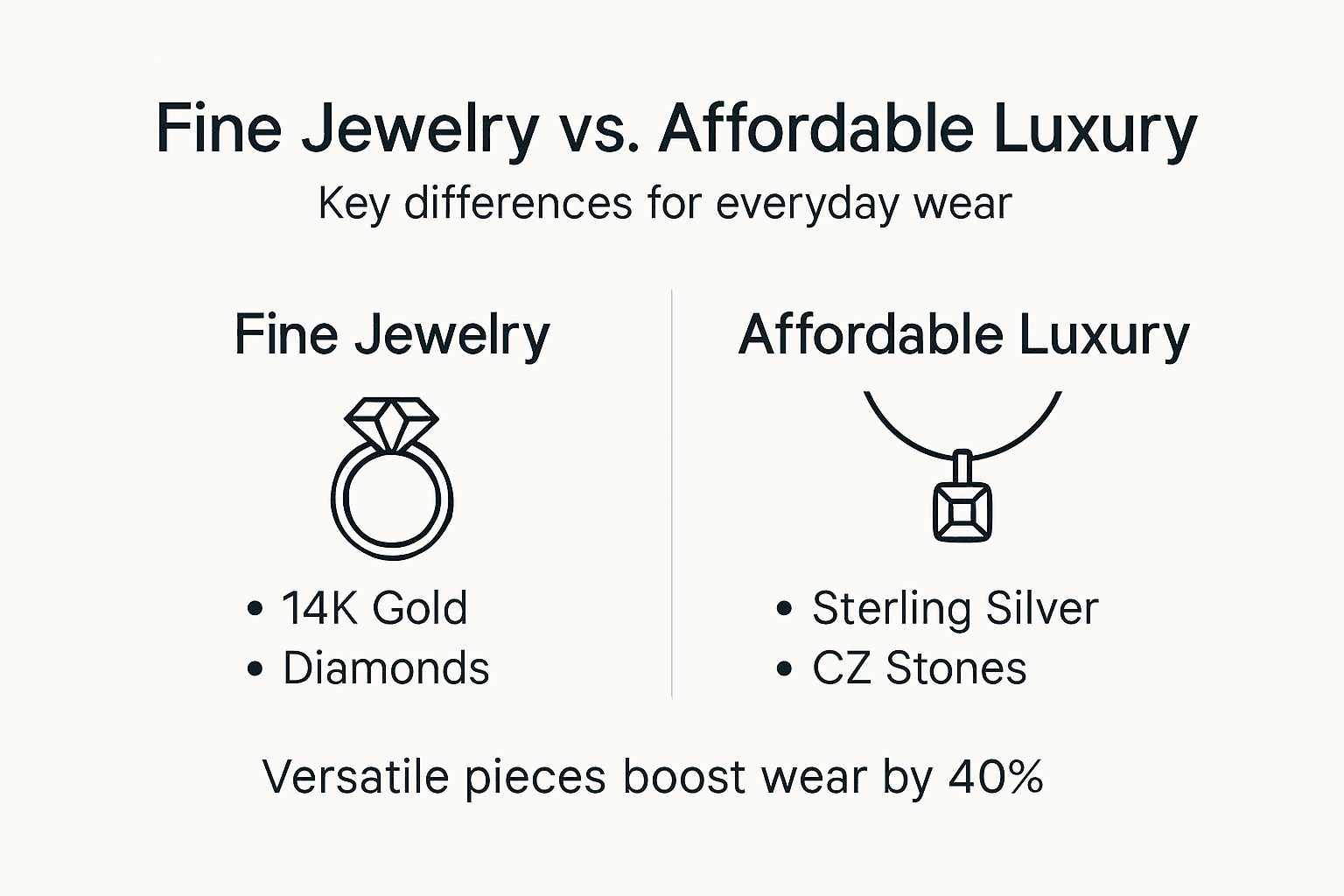
Material composition creates the primary distinction between these jewelry categories. Fine jewelry contains precious metals like 14K gold or platinum paired with natural gemstones. Affordable luxury jewelry explained uses sterling silver and high-quality synthetic stones like cubic zirconia to replicate fine jewelry’s appearance at accessible price points.
Both categories prioritize quality craftsmanship, but material costs drive price differences. Sterling silver marked 925 indicates 92.5% pure silver, offering durability and beauty without gold’s premium. Cubic zirconia stones exhibit brilliance rivaling natural diamonds when cut properly.
| Feature | Fine Jewelry | Affordable Luxury |
|---|---|---|
| Primary Metals | 14K/18K gold, platinum | Sterling silver (925) |
| Gemstones | Natural diamonds, sapphires, rubies | Cubic zirconia, lab-created stones |
| Price Range | $500 to $50,000+ | $50 to $500 |
| Value Retention | High (material worth) | Low (aesthetic value) |
| Daily Wear Suitability | Moderate (precious) | High (replaceable) |
| Maintenance Needs | Professional cleaning | Simple home care |
Aesthetic differences require close inspection to detect. Quality affordable luxury pieces feature proper stone cuts, secure settings, and smooth finishes matching fine jewelry standards. Poor lighting or quick glances reveal little difference between well-crafted cubic zirconia and natural diamonds.
Identifying quality in both categories:
- Check for proper hallmarks (14K, 18K, 925) indicating metal purity
- Examine stone settings for secure prongs and even spacing
- Feel weight and heft suggesting solid construction
- Look for smooth finishes without rough edges or visible gaps
- Test clasps and closures for secure, easy operation
Affordable luxury jewelry excels for everyday wear situations. You gain style versatility without risking valuable pieces during daily activities. Many women reserve fine jewelry for special occasions while building affordable luxury collections for regular rotation.
Price accessibility allows experimentation with current trends. You can try statement necklaces or layered looks without major financial commitment. This flexibility supports personal style development better than limiting yourself to fewer expensive pieces.
Pro Tip: Build a core collection of affordable luxury basics (studs, simple chains, stackable rings) for daily wear, then add select fine jewelry pieces for special occasions and long-term value. This strategy maximizes both style options and budget efficiency.
The versatility factor proves significant. Research shows that versatile pieces may increase wear frequency by 40% compared to trend-only items. Affordable luxury’s lower price point encourages purchasing adaptable designs you’ll actually wear regularly rather than saving rarely-worn expensive pieces.
Common Misconceptions About Fine Jewelry
Many shoppers believe only gold or platinum qualifies as fine jewelry, overlooking quality sterling silver pieces. While precious metals define traditional fine jewelry, high-grade silver with proper craftsmanship delivers comparable beauty and durability. The key lies in material purity and construction quality rather than metal type alone.
The assumption that fine jewelry costs too much for daily wear prevents many women from enjoying their pieces. Modern fine jewelry includes accessible price points, and affordable luxury alternatives specifically address this concern. Wearing jewelry regularly actually maintains its condition better than storing it unused.
Another persistent myth suggests synthetic stones equal natural ones in fine jewelry contexts. Material authenticity matters for value retention and traditional fine jewelry definitions. However, quality synthetic stones in well-crafted settings create beautiful affordable alternatives serving different purposes than investment pieces.
Common fine jewelry myths debunked:
- Myth: Fine jewelry requires only hand fabrication. Reality: Modern fine jewelry combines traditional hand finishing with precision manufacturing technologies.
- Myth: All expensive jewelry qualifies as fine jewelry. Reality: Brand markups and designer names inflate prices beyond material and craftsmanship value.
- Myth: Fine jewelry never needs professional maintenance. Reality: Regular inspections and cleaning protect your investment and prevent stone loss.
- Myth: Affordable luxury jewelry looks obviously fake. Reality: Quality affordable pieces rival fine jewelry’s appearance in most lighting and social situations.
- Myth: Investment value justifies buying fine jewelry you rarely wear. Reality: Jewelry delivers value through enjoyment and use, not just potential resale.
Understanding these distinctions helps you make confident purchasing decisions aligned with your actual needs. Some situations call for fine jewelry’s investment value and heirloom potential. Other occasions benefit from affordable luxury’s practical versatility and replacement ease.
The fine jewelry industry itself perpetuates some misconceptions through marketing emphasizing exclusivity over practical value. You don’t need the most expensive piece to enjoy quality craftsmanship and beautiful design. Educated buyers recognize that various jewelry categories serve different purposes in a well-rounded collection.
Selecting and Caring for Affordable Luxury Jewelry
Sterling silver marked 925 provides your quality foundation when selecting affordable luxury pieces. This marking guarantees 92.5% pure silver content, ensuring durability and proper tarnish resistance. Avoid unmarked silver or vague “silver-tone” descriptions indicating plated base metals that wear quickly.
Cubic zirconia quality varies significantly between manufacturers. Premium CZ stones receive precision cuts matching diamond faceting patterns, creating comparable brilliance and fire. According to Jewelers of America care guidelines, high-grade cubic zirconia maintains clarity and sparkle for years with proper maintenance.
Steps for choosing quality affordable luxury jewelry:
- Verify metal purity through visible hallmarks (925 for sterling silver)
- Examine stone cuts for even facets and proper light reflection
- Test clasps and closures for smooth, secure operation
- Check setting quality ensuring stones sit firmly without movement
- Consider versatile designs suitable for multiple outfit styles and occasions
- Read care instructions and warranty details before purchasing
- Start with basics like studs and simple chains before adding statement pieces
Cleaning routines extend jewelry life significantly. Use warm water with mild dish soap and a soft brush for regular cleaning. Avoid harsh chemicals, chlorine, and abrasive materials that scratch metal surfaces or cloud stones.
Proper storage prevents damage and tarnishing. Keep pieces separated in soft pouches or lined jewelry boxes preventing scratches from metal-on-metal contact. Remove jewelry before swimming, exercising, or applying lotions and perfumes that accelerate tarnish.
The affordable luxury jewelry impact extends beyond initial purchase price. Quality pieces maintained properly deliver years of wear, creating better cost-per-wear value than cheap fashion jewelry requiring frequent replacement.
Versatility maximizes your jewelry investment. Select designs transitioning easily from office wear to evening events. Simple geometric shapes, classic stone cuts, and neutral metal tones pair with various outfits and personal styles.
Pro Tip: Create a weekly cleaning routine for frequently worn pieces. Quick maintenance prevents buildup requiring professional intervention. Store a soft polishing cloth in your jewelry box for quick touch-ups before wearing.
Comfort matters as much as appearance for everyday pieces. Everyday wear jewelry tips emphasize lightweight designs, smooth edges, and secure closures you can fasten independently. Test pieces for comfort during試fitting, checking for sharp edges or heavy weight causing discomfort.
Building a functional collection takes time and planning. The choosing everyday jewelry guide recommends starting with essential pieces you’ll wear multiple times weekly. Add specialty items gradually as you identify gaps in your collection and understand your personal style preferences.
Conclusion: Bridging Fine Jewelry and Everyday Luxury
Fine jewelry’s essence lies in material authenticity, expert craftsmanship, and intrinsic value that transcends temporary trends. These pieces represent investments in both beauty and worth, designed for generational wear and potential appreciation. Understanding what defines quality empowers smarter purchasing decisions.
Affordable luxury jewelry democratizes elegance by replicating fine jewelry’s aesthetic appeal through quality materials like sterling silver and cubic zirconia. This accessibility allows you to build versatile collections supporting daily wear without financial stress over potential loss or damage.
Your jewelry choices should reflect personal priorities balancing style aspirations, budget realities, and practical wearing situations. Some occasions warrant fine jewelry’s investment value. Others benefit from affordable luxury’s versatile convenience. Knowledge bridges these options, letting you confidently select pieces delivering everyday elegance within reach.
Explore Affordable Luxury Jewelry at SammiBee
Ready to experience jewelry that combines fine jewelry aesthetics with everyday practicality? SammiBee’s affordable luxury jewelry selections feature carefully crafted sterling silver pieces designed for women seeking style without compromise.
Each piece balances quality craftsmanship with accessible pricing, creating collections you’ll actually wear rather than save for rare occasions. From classic studs perfect for daily office wear to elegant statement necklaces elevating evening looks, you’ll find versatile options suiting multiple style needs. Explore our everyday jewelry guide and discover how thoughtful design choices and proper care routines maximize your jewelry investment. Our jewelry craftsmanship insights reveal the quality details that make affordable luxury pieces last.
Frequently Asked Questions About Fine Jewelry
What do hallmarks on jewelry mean and why do they matter?
Hallmarks indicate metal purity and authenticity, serving as your guarantee of material quality. Common marks include 14K or 18K for gold content, 925 for sterling silver, and PLAT for platinum, letting you verify you’re purchasing genuine materials rather than plated imitations.
Can I wear fine jewelry every day or should I save it for special occasions?
Quality fine jewelry withstands daily wear when properly maintained, though you should remove pieces during activities risking damage like swimming or heavy exercise. Affordable luxury alternatives offer practical daily wear options, reserving fine jewelry for situations where you’ll notice and appreciate it most.
How can I tell if jewelry is well-crafted when shopping?
Examine stone settings for secure prongs without gaps, check that clasps operate smoothly, and look for consistent metal thickness without thin spots. Quality pieces feel substantial, show smooth finishes on all surfaces, and feature proper hallmarks indicating material authenticity and craftsmanship standards.
Does affordable luxury jewelry require different care than fine jewelry?
Both categories benefit from regular gentle cleaning and proper storage preventing scratches and tarnish. Affordable luxury pieces using sterling silver need similar care to fine silver jewelry, while the main difference involves replacement cost if damage occurs rather than maintenance routines themselves.